- Oct 14, 2026
- Private
- 22
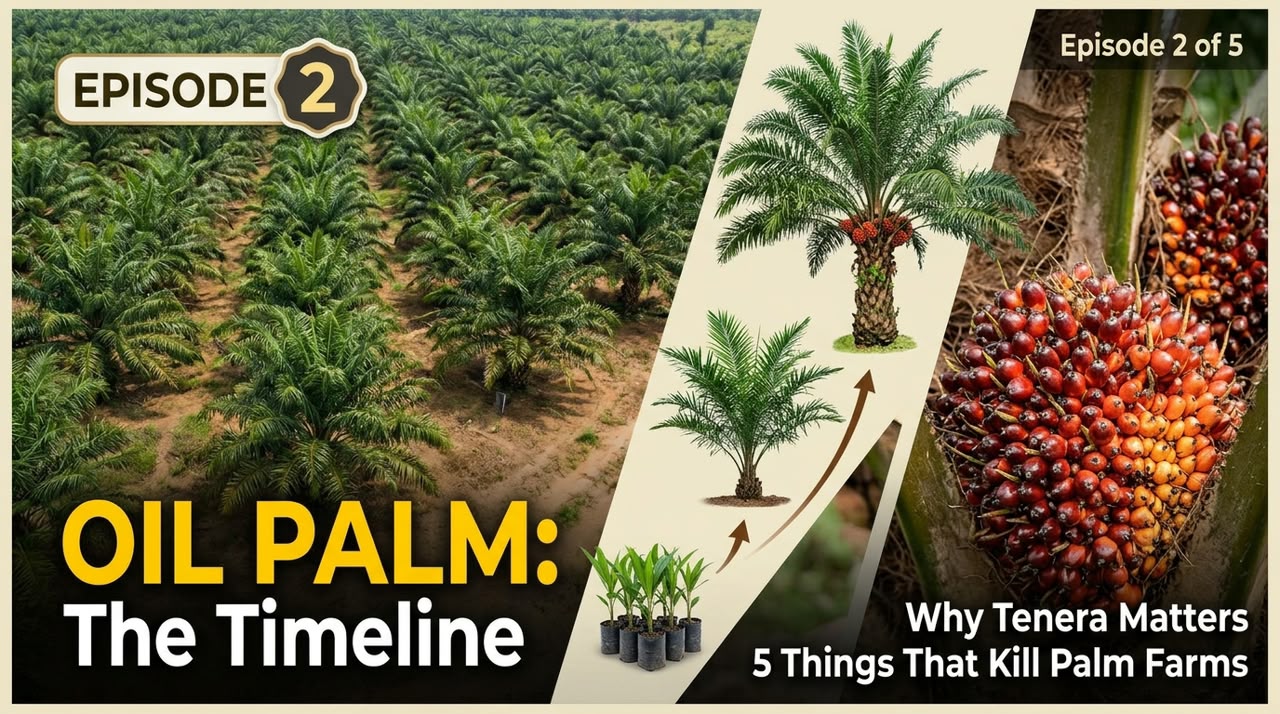
Palm Oil Investment Series, Episode 2 of 5
Sixty trees. One acre. More than twenty years of harvest. That is the basic shape of an oil palm investment in Nigeria, but most people only ever hear about the harvest. They are rarely told about the nursery, the three years with no fruit, or the decisions that quietly decide whether a farm succeeds.
In Episode 1, we looked at the national picture. Nigeria produces about 1.4 million tonnes of palm oil but consumes about 2.5 million, and the 2025 import bill reached ₦612 billion. That gap is the opportunity. This episode moves from the national numbers to the ground: one acre, followed year by year.
Here is what we cover: why 60 trees fit on one acre, the full timeline from nursery to plateau, why tenera planting material matters more than anything else you will buy, and the five things that actually kill palm farms in Nigeria.
Watch Episode 2 on YouTube
Why 60 trees fit on one acre
At the standard 9-metre triangular spacing, one acre holds about 60 oil palms. Each tree stands 9 metres from its neighbours, arranged in staggered rows so that every three trees form a triangle.
The triangle matters. It gives every palm an equal share of sunlight and root space, and it fits more trees on the land than a square grid at the same distance. Plant closer and the trees compete as they mature, shading each other and cutting yields. Plant wider and you waste land you have paid for.
So when you hear "one acre" in an oil palm investment, think "about 60 productive trees." Every number that follows, from cost to harvest, starts from that count.
The timeline: from seed to a 20-year plateau
An oil palm farm runs on a long clock. Understanding each stage is the difference between a patient investor and a disappointed one.
1. The nursery. Every tree begins as a germinated seed in a nursery, where seedlings are raised in polybags for about a year. Weak or abnormal seedlings are culled here, before they ever reach the field.
2. Planting. The land is cleared, laid out at 9-metre triangular spacing, and the seedlings go into the ground, ideally at the start of the rains.
3. The three years with no fruit. This is the stage most people are never told about. The trees need weeding, fertiliser, pest control and protection, yet they produce nothing to sell. Money goes out and nothing comes in. Farms that are neglected here never recover their potential.
4. The five-year climb. Harvests begin, small at first, and rise year after year as the trees mature and the bunches grow heavier.
5. The 20-year plateau. A mature, well-managed acre settles at roughly 8.1 tonnes of fresh fruit bunches per year, and holds near that level for about two decades. This is the long, productive life the whole investment is built on.
The lesson is simple. The returns live in the plateau, but the plateau is only reached by getting the first three years right.
Why tenera matters more than anything else you will buy
The seed you plant decides the next 25 years. Get it wrong and no amount of fertiliser, labour or good management will fix it.
Tenera is the improved hybrid variety, a cross between dura and pisifera palms. Its fruit has a thin shell and a thicker, oil-rich flesh, so each bunch gives noticeably more oil than the traditional dura palm common in older Nigerian groves.
The danger is that a dura seedling and a tenera seedling look the same in the nursery. You only discover the difference years later, when the first bunches are cut open. By then, the land, the time and the maintenance money are already spent.
That is why planting material should come only from certified, traceable sources, such as the Nigerian Institute for Oil Palm Research (NIFOR) and other accredited seed producers. For an investor, the question to ask is direct: where did these seedlings come from, and can that be verified?
Most people only hear about the harvest. This episode shows you the waiting, the risks, and the decisions that make or break a plantation.
Watch full video here:
📊 Next, Episode 3 opens the books: costs, revenue, and the real numbers for one acre.
🔔 Subscribe to Invest With Seyi so you don't miss the rest of the series.
Educational content only, not financial advice. Nothing is being sold. Learn, ask questions, and verify for yourself.
Oluwaseyi Kudakin
MD/CEO, OiK Investment Limited
www.oikinvestment.com
Disclaimer: This article is for educational purposes only and is not financial advice. Nothing is being sold in this series. Yield figures are typical estimates for well-managed plantations using quality planting material; actual results vary with management, climate, soil and other factors. Always do your own research and verify before investing.


